
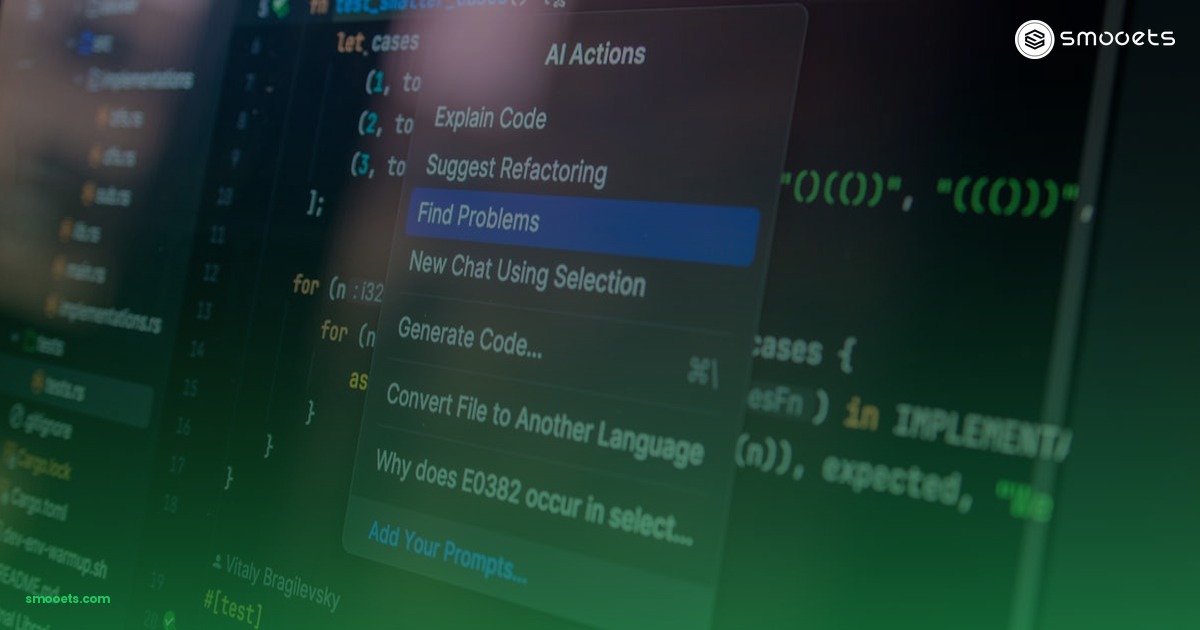
The Death of the Manual Coder: Why Your Next Lead Dev Will Be a Vibe Architect
AI Overview
The rise of AI-assisted development is reshaping software engineering as we know it. By 2026, the role of the traditional “manual coder” is rapidly giving way to a new breed of technical leader: the Vibe Architect. Rather than writing every line of code by hand, Vibe Architects use AI tools like Cursor, GitHub Copilot, and Windsurf to orchestrate entire systems through intent-driven development. This shift is particularly relevant for businesses in Singapore, Australia, and the US looking to build software faster, cheaper, and with fewer errors — all while retaining human oversight through Senior Architect governance.
The Shift from Manual Coding to Intent-Driven Development
For decades, software development followed a predictable pattern: requirements → design → manual coding → testing → deployment. Each line of code was painstakingly typed by a human developer. But that era is ending.
In 2025, Andrej Karpathy coined the term “Vibe Coding” — a new paradigm where developers describe what they want in natural language, and AI generates the implementation. By 2026, this has evolved from an experimental technique into a production-grade methodology embraced by forward-thinking software houses worldwide.
The traditional manual coder writes code. The Vibe Architect designs intent. And that distinction is the single most important shift in modern software engineering.
What Is a Vibe Architect?
A Vibe Architect is a senior technical professional who combines deep architectural knowledge with mastery of AI-assisted development tools. They don’t type boilerplate. They don’t debug syntax errors. Instead, they:
- Define system architecture and data flow at a high level
- Prompt AI tools to generate production-ready code
- Review, validate, and refine AI outputs
- Ensure security, scalability, and maintainability
- Bridge the gap between business intent and technical implementation
This role is not about removing humans from the loop. It’s about elevating them. The Vibe Architect is a human-in-the-loop Senior Architect who oversees AI-generated code, makes critical design decisions, and ensures quality standards are met.
Why the Manual Coder Is Fading — Three Market Realities
1. Speed-to-Market Dominates Everything
In Singapore’s competitive fintech scene, Australia’s growing SaaS ecosystem, and the US startup landscape, speed is the single greatest competitive advantage. AI-assisted development cuts coding time by 40–60% on average. Companies that still rely on manual coding are simply being outpaced.
2. Cost Efficiency Demands Automation
Software development costs in Australia and Singapore have risen sharply. A senior developer in Sydney commands AUD $150,000–$200,000 annually. By leveraging AI tools, Vibe Architects can deliver the same output as a team of 3–4 manual coders — dramatically reducing per-feature cost.
3. Quality Improves with AI Review
Contrary to fears, AI-generated code reviewed by a Senior Architect often contains fewer bugs than manually written code. Tools like Cursor and Windsurf catch edge cases humans miss. Combined with the architect’s oversight, the result is cleaner, more robust software.
Comparison: Manual Coder vs. Vibe Architect
| Dimension | Manual Coder | Vibe Architect |
|---|---|---|
| Primary Activity | Typing code line by line | Prompting & orchestrating AI |
| Output per Day | 200–400 lines of production code | 800–2,000 lines (AI-assisted) |
| Bug Rate (pre-review) | 15–25% | 5–10% (AI catches early issues) |
| System Thinking | Often limited to immediate task | End-to-end architecture focus |
| Best For | Simple, well-defined tasks | Complex, multi-service systems |
| Human Oversight | Self-audited | Senior Architect reviews AI output |
| Scaling | Linear (hire more coders) | Super-linear (AI multiplies output) |
The Tech Stack of a Vibe Architect
Modern Vibe Architects at Smooets work with a proven tech stack optimized for AI-assisted development:
- Backend: Golang for high-performance microservices, Laravel and PHP for rapid API development
- Frontend: React and React Native for cross-platform applications
- AI Tools: Cursor (primary IDE), GitHub Copilot (code completion), Windsurf (multi-file refactoring)
- Infrastructure: Cloud-native deployment with automated CI/CD pipelines
- Testing: AI-generated test suites with human-validated edge cases
- Documentation: Auto-generated via AI from code context
This stack isn’t theoretical — it’s what we use daily, Serving Global Clients from Our Tech Hub in Bali.
The Vibe Coding Toolchain: Cursor, Copilot, and Windsurf
Cursor
Cursor has emerged as the leading AI-first IDE for serious software development. Unlike traditional editors with AI plug-ins, Cursor is built from the ground up for AI collaboration. It understands your entire codebase, suggests multi-file changes, and can refactor across your project with a single prompt.
GitHub Copilot
Copilot remains indispensable for inline code completion. It excels at boilerplate, unit tests, and repetitive patterns. Combined with Cursor’s broader context awareness, Copilot handles the micro-level while Cursor handles the macro-level.
Windsurf
Windsurf (by Codeium) has carved a niche in multi-file refactoring and cross-module analysis. When a Vibe Architect needs to rename a type across 30 files, update all imports, and adjust the test suite — Windsurf handles it in seconds.
These three tools form the Vibe Coding Trinity. No single tool covers all use cases, but together they enable the Vibe Architect to work at a pace that manual coders cannot match.
AI Orchestration: More Than Just Generating Code
Advanced Vibe Architects don’t just prompt for code — they orchestrate. This means:
- Context Injection: Providing the AI with architectural rules, database schemas, API contracts, and business logic constraints before generating code
- Iterative Refinement: Using AI to generate 3–5 variations of a solution, then selecting and combining the best elements
- Validation Chains: Having AI generate tests alongside implementation, then using the same AI tool to verify test coverage
- Knowledge Capture: Building internal prompt libraries and AI interaction patterns that the entire team can reuse
The result is a development workflow that feels less like typing and more like directing — hence the title “Vibe Architect.”
How to Transition Your Team to Vibe Architecture
For business leaders in Singapore, Australia, and the US evaluating this shift, here’s a practical roadmap:
Phase 1: Tool Adoption (Weeks 1–2)
Equip your existing senior developers with Cursor, Copilot, and Windsurf. Let them explore in a sandbox environment. Measure productivity baselines before and after.
Phase 2: Workflow Redesign (Weeks 3–4)
Redefine what “coding” looks like. Shift from writing code to writing prompts that generate code. Establish review gates where Senior Architects validate all AI output before it enters production.
Phase 3: Team Restructuring (Months 2–3)
Create the Vibe Architect role. Your best senior developers naturally grow into this. Junior developers become “AI Associates” — learning architecture by reviewing AI output under guidance.
Phase 4: Optimization (Ongoing)
Build your prompt library. Measure velocity improvements. Share patterns across teams. Continuously refine the human-AI collaboration model.
For a more detailed look at building effective teams in the AI era, read our guide on how to build an AI-ready development team.
Common Concerns — Addressed
“AI-generated code is unreliable.”
It can be — without oversight. That’s why the Vibe Architect model always includes human-in-the-loop Senior Architect review. AI handles the implementation; humans handle the judgment.
“We’ll lose our junior developer pipeline.”
Actually, the opposite happens. Juniors review AI-generated code, learn patterns faster, and develop architectural thinking sooner. They become productive contributors within weeks, not months.
“This only works for simple CRUD apps.”
Not anymore. With tools like Cursor’s agent mode, Vibe Architects handle complex microservice orchestration, event-driven architectures, and even infrastructure-as-code — all through AI-assisted workflows.
Ready to Evolve Your Development Team?
The manual coder isn’t disappearing overnight. But teams that embrace the Vibe Architect model today will have a decisive advantage in speed, cost, and quality over those that don’t.
At Smooets, we’ve already transitioned our core engineering teams to this model. Our Senior Architects use Cursor, Copilot, and Windsurf daily — delivering applications in Golang, Laravel, PHP, Python, and React Native at speeds our competitors can’t match.
Claim a Free 1-Month MVP Slot — Let our Vibe Architects build your next prototype in weeks, not months. We’ll apply the full AI-assisted workflow to your project, with Senior Architect oversight every step of the way.
Contact us today to discuss how Vibe Architecture can transform your next project. Serving Global Clients from Our Tech Hub in Bali.